
![Zenfushō - [Yokai | Tsukumogami]](http://samkalensky.com/cdn/shop/files/IMG_3072_{width}x.jpg?v=1769536605)
![Zenfushō - [Yokai | Tsukumogami]](http://samkalensky.com/cdn/shop/files/IMG_3041_{width}x.jpg?v=1769536605)
![Zenfushō - [Yokai | Tsukumogami]](http://samkalensky.com/cdn/shop/files/IMG_3019_29373856-c9ff-46b9-8e79-e42f75bb1dbe_{width}x.jpg?v=1769536605)
![Zenfushō - [Yokai | Tsukumogami]](http://samkalensky.com/cdn/shop/files/IMG_3038_{width}x.jpg?v=1769536605)
![Zenfushō - [Yokai | Tsukumogami]](http://samkalensky.com/cdn/shop/files/IMG_3083_cac26963-22f2-44f0-b1a5-f9bb5a5864de_{width}x.jpg?v=1769536605)
![Zenfushō - [Yokai | Tsukumogami]](http://samkalensky.com/cdn/shop/files/IMG_3080_{width}x.jpg?v=1769536605)
![Zenfushō - [Yokai | Tsukumogami]](http://samkalensky.com/cdn/shop/files/IMG_3071_{width}x.jpg?v=1769536605)
![Zenfushō - [Yokai | Tsukumogami]](http://samkalensky.com/cdn/shop/files/IMG_30402_{width}x.jpg?v=1769536605)
![Zenfushō - [Yokai | Tsukumogami]](http://samkalensky.com/cdn/shop/files/IMG_3040_{width}x.jpg?v=1769536605)
![Zenfushō - [Yokai | Tsukumogami]](http://samkalensky.com/cdn/shop/files/IMG_3043_{width}x.jpg?v=1769536605)
![Zenfushō - [Yokai | Tsukumogami]](http://samkalensky.com/cdn/shop/files/IMG_3048_{width}x.jpg?v=1769536605)
![Zenfushō - [Yokai | Tsukumogami]](http://samkalensky.com/cdn/shop/files/IMG_3056_{width}x.jpg?v=1769536605)
![Zenfushō - [Yokai | Tsukumogami]](http://samkalensky.com/cdn/shop/files/IMG_3072_530x@2x.jpg?v=1769536605)
![Load image into Gallery viewer, Zenfushō - [Yokai | Tsukumogami]](http://samkalensky.com/cdn/shop/files/IMG_3072_1024x1024@2x.jpg?v=1769536605)
![Load image into Gallery viewer, Zenfushō - [Yokai | Tsukumogami]](http://samkalensky.com/cdn/shop/files/IMG_3041_1024x1024@2x.jpg?v=1769536605)
![Load image into Gallery viewer, Zenfushō - [Yokai | Tsukumogami]](http://samkalensky.com/cdn/shop/files/IMG_3019_29373856-c9ff-46b9-8e79-e42f75bb1dbe_1024x1024@2x.jpg?v=1769536605)
![Load image into Gallery viewer, Zenfushō - [Yokai | Tsukumogami]](http://samkalensky.com/cdn/shop/files/IMG_3038_1024x1024@2x.jpg?v=1769536605)
![Load image into Gallery viewer, Zenfushō - [Yokai | Tsukumogami]](http://samkalensky.com/cdn/shop/files/IMG_3083_cac26963-22f2-44f0-b1a5-f9bb5a5864de_1024x1024@2x.jpg?v=1769536605)
![Load image into Gallery viewer, Zenfushō - [Yokai | Tsukumogami]](http://samkalensky.com/cdn/shop/files/IMG_3080_1024x1024@2x.jpg?v=1769536605)
![Load image into Gallery viewer, Zenfushō - [Yokai | Tsukumogami]](http://samkalensky.com/cdn/shop/files/IMG_3071_1024x1024@2x.jpg?v=1769536605)
![Load image into Gallery viewer, Zenfushō - [Yokai | Tsukumogami]](http://samkalensky.com/cdn/shop/files/IMG_30402_1024x1024@2x.jpg?v=1769536605)
![Load image into Gallery viewer, Zenfushō - [Yokai | Tsukumogami]](http://samkalensky.com/cdn/shop/files/IMG_3040_1024x1024@2x.jpg?v=1769536605)
![Load image into Gallery viewer, Zenfushō - [Yokai | Tsukumogami]](http://samkalensky.com/cdn/shop/files/IMG_3043_1024x1024@2x.jpg?v=1769536605)
![Load image into Gallery viewer, Zenfushō - [Yokai | Tsukumogami]](http://samkalensky.com/cdn/shop/files/IMG_3048_1024x1024@2x.jpg?v=1769536605)
![Load image into Gallery viewer, Zenfushō - [Yokai | Tsukumogami]](http://samkalensky.com/cdn/shop/files/IMG_3056_1024x1024@2x.jpg?v=1769536605)
Zenfushō - 禅釜尚 (ぜんふしょう) - [Yokai | Tsukumogami] - aka: ‘Zen Kettle.’
• About this Yokai: A tsukumogami with the head of an antiquated kettle. It overflows with an endless supply of hot water (or possibly tea or steam) resembling a mop of hair. It has a goofy upturned, pig-like nose and buck teeth. It thrives in gloomy atmospheres, leaping about causing a ruckus, splashing tea everywhere! The tea pot springs to life and dances wildly at an otherwise peaceful tea ceremonies, ruining the tranquil scene! following the example set by a certain Tanuki… *The Final member of "Yarikecho’s mushroom extermination crew" in charge of cleanup.
• Origins: One of the three tsukumogami in a two page spread included at the start of Toriyama Sekein’s Gazu Hyakki Tsurezure Bukuro (1784) The other two in the spread are a Staff and an Inro named Yarikecho and Koinryorespectfully. Notably, Zenfusho is the only one of the three not holding a weapon, but rather he's leaping around in front of a waterfall. - Toriyama describes Zenfusho as follows:
“The tea ceremony deeply values tranquility. Might this “yin” force cause strange things like Zen-fushō to happen? Bunbuku Chagama set the example. So I dreamed.” - Translation: Japandemonium Illustrated (2017)
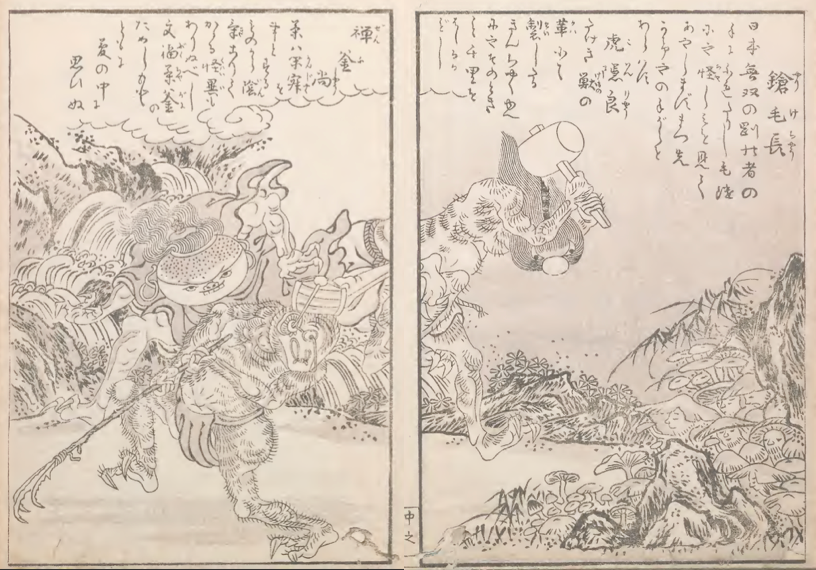
Zenfushou, Koinryo & Yarikecho [image source: Smithsonian/archive.org]
• The antique in question: This yokai’s head appears to be a cast iron cauldron or a teakettle. Given the connection between tea ceremonies and Zen Buddhism, this yokai’s name Is seemingly a pun on “Zen Osho” meaning “Zen Priest”. ( Zen priests are generally guided by non-violence but are known to practice martial arts as a form of meditation, which might explain why this yokai unlike its peers, its not holding a weapon?)
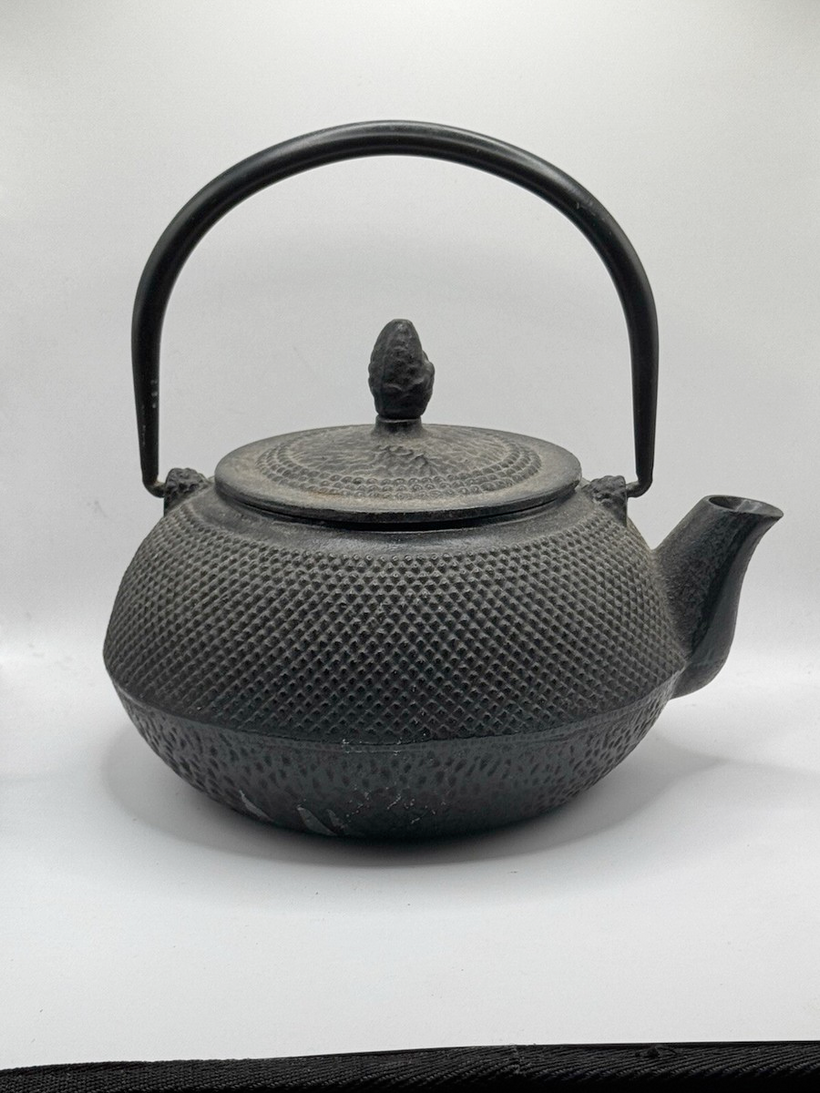
[A Japanese style iron kettle.]
The “Bunbuku Chagama" mentioned in Sekien’s description is of course the famous fairy tale about a tanuki who transformed into a tea pot but got stuck in that form and then becomes a street performer for his keep. The story has been well known for generations and has been used in story books & other media for a very long time now. What many don't realize is that Bunbuku was inspired by the story of “Moriniji-no-Okama” from Moriniji temple in what is modern day Gunma prefecture, their version is about a Tanuki who took the form of a monk, he had a special lucky kettle for making tea that could remain hot for six or seven days, it supposedly brought fortune & other luck (Career advancements, Long Life, etc) to those that drank from it! The Lucky kettle is still displayed in Moriniji Temple to this day, the mountain & temple grounds are also decorated with a TON of vintage tanuki statues. - Toriyama even had an entry for Moriniji-no-Okama in his earlier books!
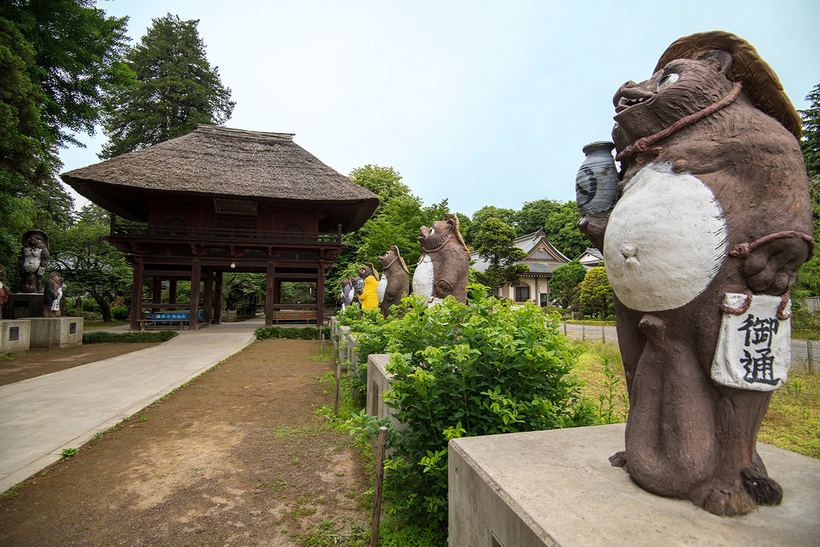
[a path leading to the temple grounds image source: visit gunma]
In Zenfusho’s entry, Toriyama says that Bunbuku “set the example” for Zenfusho's antics, so it seems pretty clear that Zenfusho isn’t a tanuki or directly related. Rather that Zenfusho is perhaps a kettle which came to life on its own, from the “yin force” which is set at the scene of an otherwise tranquil tea party, as a tsukumogami, and not a tanuki turned kettle, although his acrobatic behavior does seem to have been inspired by the bunbuku story. - Folklorist Shigeru Mizuki once said that this yokai is perhaps the 'original kettle yokai' in that its a "utensil that became a monster" rather than "a tanuki's magic kettle."
• Similar yokai: Something which we do know for sure is that the poses of Zenfusho and Company are likely borrowed from a Muromachi-era Hyakki Yagyo Emaki picture scroll. [below] The yokai that Zenfusho and Koinryo are imitating aren’t named, but the one Yarikecho is copying is ‘Kanazuchibo’, posed with his mallet to smack down ‘Okka’ as usual. I’ve also read some yokai scholars compare the horned yokai with Koinryo pose’s face to the Kirin but I don’t buy it…as usual, these scrolls are so old, it’s impossible to say what might have been on the original artist’s minds.
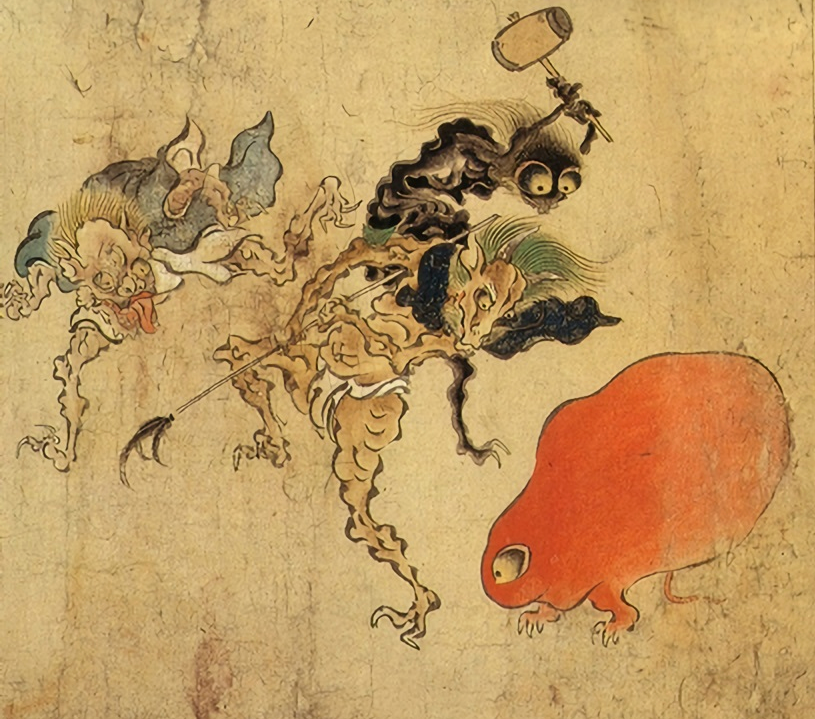
...Looking back to the Heian periods; Tsukumogami Emaki (which is notably one of the earliest illustrated scrolls to really give 'lore' to Tsukumogami.) There are also two kettles which become elephant-like yokai. I'm sure I could look through several more scrolls and books and hundreds upon hundreds of kettle or cauldron yokai would appear. I'm sure you could fill a book with kettles & teacups only! Call it a "Tsukumogami tea-party."


[another kettle with legs, via Yokai Senjafuda.]
I cant shake the feeling that given the fact that Koinryo is said to be made from the “skin of a vicious animal” and because Bunbuku is also mentioned… Perhaps the two entries were intended to be read together as another “tanuki sack” joke or as i've said previously, perhaps there was some third joke or pun that might have been lost to time.... its hard to say anything with certainty!
*Is Yarikecho, about to strike the Mushroom Men with his mallet? Smashing mushrooms like that will only make them spread!! --Come to think of it… could that be what these three are doing? Exterminating yokai mushrooms? With Yarike leading as the first to strike, Koinryo quickly raking up the remains, and Zenfusho rinsing them away with a kettle of hot water? But that still wouldn’t stop them from spreading! These three yokai are often thought of as a squad of bandits but for all we know; they might also be the worst yokai gardeners ever!!

[Art sticker & Writing by @SamKalensky (yo, thats me!) Editing by @Cattype. Part of my Hyakki Yagyo Night Parade of 100 yokai sticker series. Follow & check my shop out for many more!]