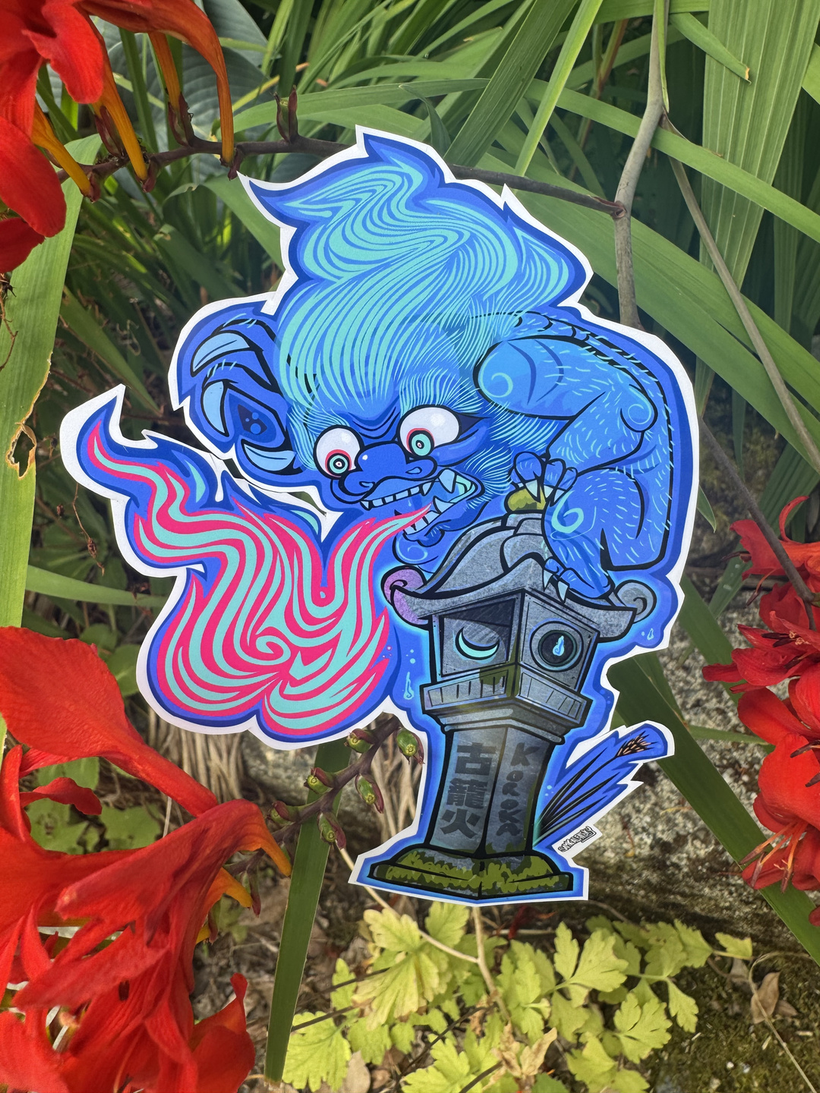
• About this Yokai: A lonely stone lantern that stood unlit for decades unti lafter about a century, it became sodissatisfied that it manifested a flame spitting demon which ignites from its top! Now it breathes fire wildly all night, every night!
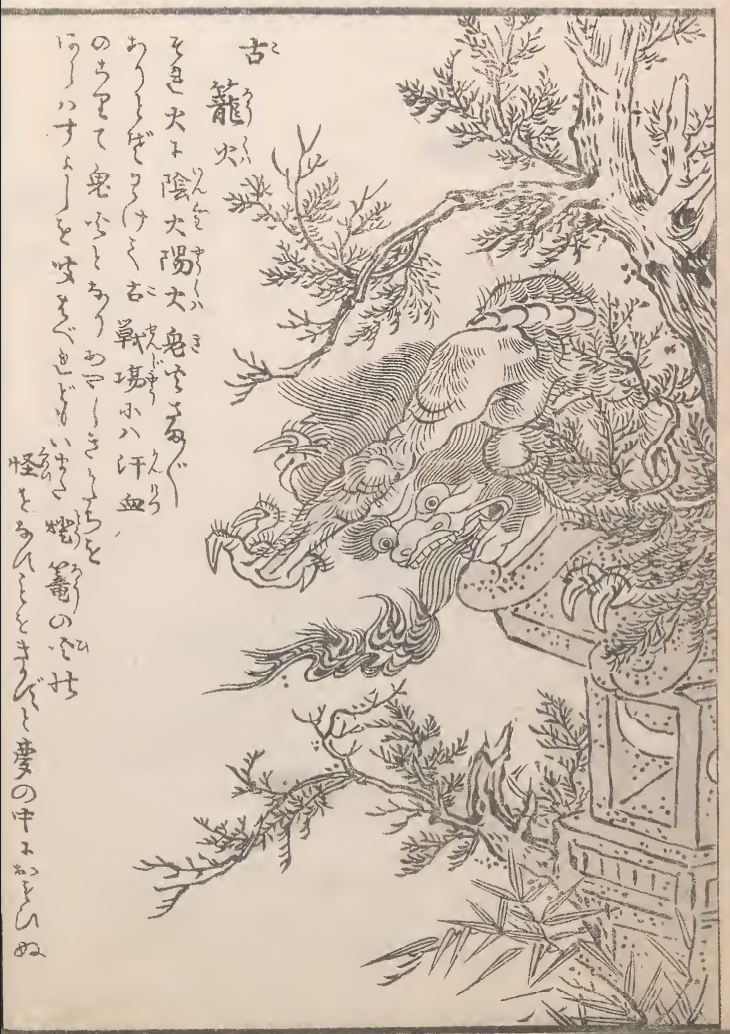
• Origin & Early appearances: This tsukumogami was earliest named & drawn by Toriyama Sekien in his “Gazu Hyakki Tsurezure Bukuro” (1784) Toriyama illustrated this fire breathing demon sitting atop of an ishidoro (old stone lamp, 石灯籠) which appears to have been reclaimed by nature. Trees, plants & weeds engulf it; obscuring the backside of the lantern (& the yokai), giving the stone lantern an aged appearance. Toriyama’s included illustration & verse are as follows:
“There are so many types of enchanted fire: yin-fire, yang-fire, demon-fire. I’ve heard of the sweat and blood left on old battlefields igniting into demon-fire to show their strange forms; yet why have I never heard mention of a haunted stone lantern? So I dreamed.” – ]Translation by Japandemonium Illustrated 2017]
Admittedly, it’s a bit difficult to say much more about Korōka specifically because, as Toriyama said, he also “never heard of one!” Toriyama also mentions several ghost lights which are imported from the Chinese occult, yin-fire (inka, 陰火) & yang-fire (yōka, 陽火) are fires that burn from either side of the dualistic yin-yang essence of things. He also mentions “demon fires” also known as onibi (鬼火) that, as said, appear on the fields where great battles where once held.
Legends of eerie floating ghost lights have been around for a very long time and span across most cultures. They are almost always said to be the work of ghosts, demons, fairies or other malevolent spirits. Best known of these ghost lights is the will-o-the-wisp from English folklore. As said, in the case of koroka the light is made by an old, forgotten stone lamp, which in time eventually gained a soul, becoming a Tsukumogami!
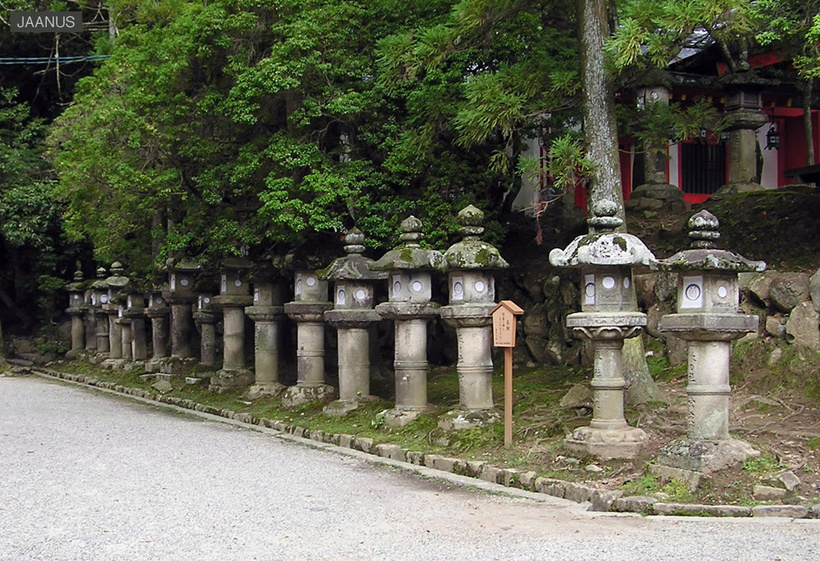
• About the Artifact: Ishidoro (石灯籠) or stone lanterns where introduced to Japan from China & Korea in the 6th century as votive markers. Ancient lanterns are an especially common sight at shrines & temples. Stone lanterns eventually became a popular sight at teahouses & zen gardens for their calming, mossy aesthetic. These lamps often feature crescent moon and sun cut outs as small windows on either side of the basin symbolizing the harmony of opposite forces. (Notably, in Toriyama’s original image of Koroka only the moon is fully visible through the front window, the sun is obscured…) In Buddhist tradition, these stone lanterns are symbolic of the metaphorical light of the teachings of Buddha overcoming the darkness of ignorance. (So perhaps the Koroka’s sun not being visible was intentional.) In the Shinto religion stone lanterns often serve as “yorishiro”-things that attract the essence of kami, spirits, and deities. They are also used during Obon to help guide ancestors spirits home.
[Kasuga shrine In Nara Prefecture has over 3000 lanterns of various sizes and styles, supposedly each one represents a temple found elsewhere across the country. For more about various Japanese lanterns, visit “Onmark productions” & “JAANUS.”]
• Similar yokai: Much later in the 1994 Yokai Encyclopedias by Shigeru Mizuki (1922-2015) Mizuki cited & compared Koroka to an older story which was collected by novelist Norio Yamada (1922-2012) in his 1974 collection of supernatural stories, “Journey Through the Ghost Stories of Tohoku” (東北怪談の旅 ) which contains a number of legends which he had allegedly collected during his own field work. The story therein titled “The Old Lantern Fire at the Abandoned Mansion” (古屋敷の古籠火) goes as follows:
“A samurai of the Tamura Clan of the Kaminoyama Domain (present day Yamagata Prefecture) had been transferred from Edo to serve in his home province. He was to live in an abandoned mansion until his new residence was built. While he and his family were having dinner in that old mansion, the garden suddenly became bright. Tamura asked if someone had lit a fire, but no one had. An elderly servant suddenly explained that this was known as “Koroubi”— an old lantern that, if left unlit for a while, would spontaneously ignite on its own.
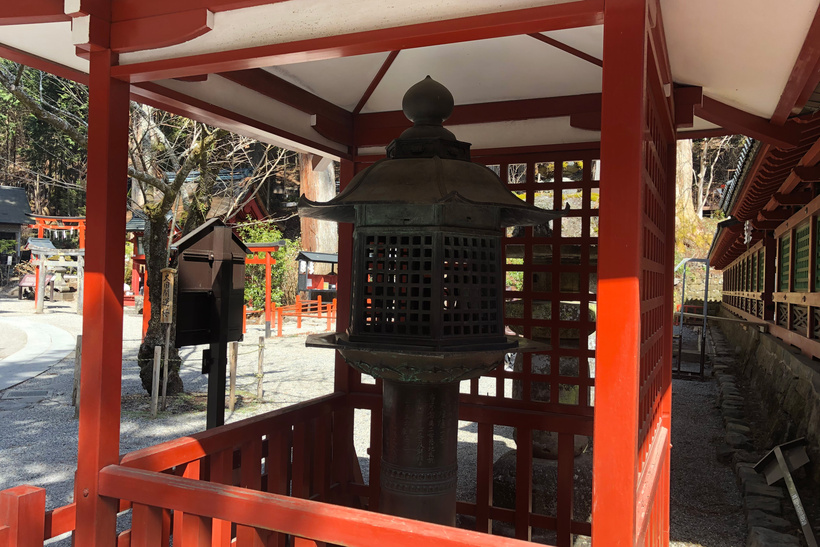
Another particularly famous ghost lantern catalogued by Mizuki is the “Bakedoro” of Futarasan Shrine in Nikko, Tochigi prefecture. According to the shrine’s website, the lantern has been there since the 1200s! Towards the end of the Edo Period (1603–1867) samurai who were guarding the temple would often mistake this lantern’s flame for an apparition and would slash at the light with their katana. As a result, there are approximately seventy small cuts on this lantern. The lantern is now venerated today and is protected by a red wooden mini-shrine with a pagoda styled roof. According to Shigeru Mizuki, lanterns like this one will appear to those that are lost during pilgrimages in the Tochigi mountains and cause the traveler to see forks in the road that aren’t really there! So if you’re suddenly seeing double it’s the work of bakedoro. It’s better to stay calm and continue down your path rather than panic.
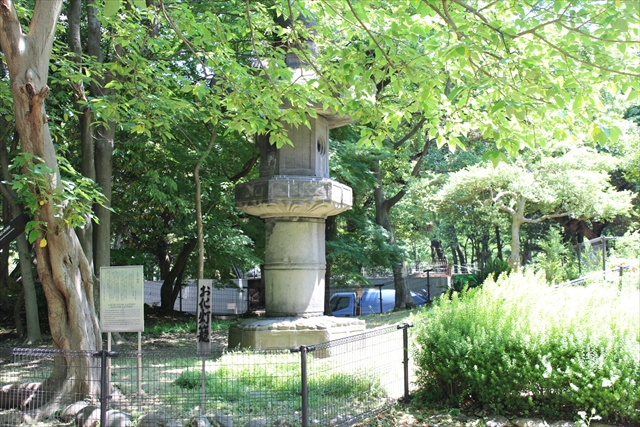
Ueno park in Tokyo is famous for having 200+ stone lanterns. One of them is called the Obake Hikago(おばけ灯籠) That’s not “obake” as in “ghost” or “monster,” that’s “obake”as in “MONSTROUSLY HUGE!” It’s 6’8″ (a whole foot taller than me!) This huge lantern has been around since 1631! There are no ghost stories to do with it that I could find (at least from a quick search) nor is the area really considered a “ghost spot.” It’s just a massive lantern given its nickname for its imposing size. It’s certainly not a lantern you’d want to run into in a dark ally.
• A List of Wisps: Below I’ve listed all of the different types of wisp’s & other fireball related yokai that Toriyama Sekien included across his Hyakki Yagyo (1776-1781) There are also a few which are related to tricks played by henge yokai (transforming animals such as kitsune or tanuki.) and fire related yokai in general. Those which I’ve already completed stickers for will have a link to their pages & biographies. (I’m quite picky about which yokai fires I draw because If I draw too many of them, my sticker booth would look like it had burst into flame!!) For even more ghostly lights & similar phenomena, see my bio for “will-o-the-wisp”[coming soon.]
• Oni-bi (鬼火) “Demon Fire” – Ghostly flames that suddenly ignite out of thin air; usually in the summertime when its raining. They’re cool to the touch & are beautiful but dangerous. Living creatures that get too close are said to have their souls/energy drained. Said to be caused by ghosts, demons, or other yokai nearby (or a sign that one is present.) In modern popular media its usually illustrated as multicolored spiral flame.
• Mino-bi (蓑火) “Raincoat Fire” – A small eerie green-ish flame, often appearing on rainy days near lakes and rivers. Named as such as it infamously attacks passersby wearing straw raincoats or “mino”. They’re most commonly attributed to fireflies or bagworm moths. Bagworms are called “minomushi” or “mino bugs” in Japanese which is why mino-bi is also known as Minomushi-bi (みのむし火)
• Kosenjo-bi (古戦場火) “Battle field flames” – Ball shaped blue flames that are thought to belong to the restless spirits of warriors who perished on the battlefield. They now appear in areas where bloody battles where once fought. Unlike the previous blue onibi, their presence won’t harm humans.
• Hito-dama (人魂) a.k.a. hi-no-tama “Human Soul” – The detached ethereal souls of humans usually appearing as an orb floating in graveyards or when someone has recently passed on or died. They leave a trail of light behind them. (For more about human souls & ghosts, see also Yurei, Ikiryo, & Onryo.)
• Haka-no-hi (墓の火) “Grave Fire” – A mysterious wisp of ethereal flame that appears around the base of long abandoned grave sites. The cause of them is unknown although it’s theorized that they are the spirits of people who were forgotten and thus are unable to pass on in the afterlife.
• Sarakazoe(皿数え) “Counting Plates” – The ghostly lights related to Okiku’s spirit in the legend of Bancho SarashikiThis mournful spirit appears from a well at Himeji Castle, the site of Okiku’s grisly murder.
• Sogen-bi(叢原火) “Sogen’s fire” – The flaming spirit of a wicked monk of Mibu-dera Temple in southern Kyoto. In life, Sogen stole lantern oil & gambled away his fortune. Now he burns for it, appearing suddenly on the temple grounds on rainy nights.
•Ubaga-bi(姥ヶ火) “Old hag fire” – The flaming spirit of a crazy old hag said to appear on rainy evenings at the pond behind Hiraoka Shrine in Kawachi, Osaka Prefecture. She stole lantern oil intended as an offering and now burns for it. She appears near the shrine’s pond each night as a cackling fireball.
• Abura Akago(油赤子) “Oil baby” – Yet another oil thief who supposedly stole sacred oil, now appears as a ghostly flaming infant who continues to drink the oil from lamps. It’s sometimes also known as “Abura-bo.”
• Wanyudo (輪入道) “Wheel Priest” – The flaming head of a cruel monk or a warlord condemned to be trapped in a rolling oxcart wheel alight withHELL FIRE!! Said to roll through towns and eat infants in front of their unwary mothers just for looking in their direction!
• Katawaguruma (片輪車) “Crippled Wheel” – Appears as the upper torso of a woman emerging from the flames of a burning ox-cart wheel blazing with HELL FIRE!!! Like Wanyudo, these cruel spirits are also said to roll through towns and kidnap infants of unwary mothers. They bestow a very powerful & poetic curse on those that see them.
• Furaribi(ふらり火) “Aimless fire”- A flaming, bird-like yokai. No explanation was given for it though today it’s often associated with “Burari-bi” and the various grisly murder stories surrounding the lore of Toyama Castle.
• Tsurube-bi (釣瓶火) “Well Bucket Fire” – A cold flame that drops down & bobs from pine trees in a teardrop shape. Often associated with Kodama (tree spirits) or otherwise said to be a similar yokai as “Tsurube-Otoshi“. However, Tsurube-bi is not dangerous at all, as their the flame does not burn.
• Shiranui a.k.a. Shiranu-hi (不知火) “Unknown Fire” – Beautiful streaks of light which appear to dance out at sea under the moon along the shores near Kyushu! Sometimes said to belong to the dragon god, Ryujin in which case the mysterious fires are also known as Ryūtō(龍燈). The Grand Tori gate of Itsukushima Shrine in Hiroshima Prefecture was a popular sightseeing location for watching these lights as the sun sets. Though, sadly they’re becoming harder to see as modern light pollution has taken hold.
•Kitsune-bi(狐火) “Fox Fire” – Illusions of fire or glowing multicolored orbs made by magical kitsune. Known to distract or lead people off the beaten path causing the pursuer to become completely lost! Not dangerous on their own but it’s never a good idea to follow these flames. In the context of Inari’s divine foxes these flames are sometimes connected to an auspicious jewel known as a “hoju”; these flames are known as “Hoshi-no-tama.” (ほしのたま)
• Chochin-bi (提灯火) “Lamp fire” – lamp-like balls of fire often appearing in a line in the footpaths between farmers’ rice fields, often said to be the same thing or similar to Kitsune-bi (see also “Chochinobake/Bura-bura.”)
• Ten-Asobi (鼬遊び)“Weasel Play” – A phenomena where in martens or weasels (the words for them are used interchangeably) will climb atop each other in the middle of the night and ignite with supernatural flames; transforming into a dangerous pillar of magical fire in order to attack suburban homes. If they cry out in unison it’s considered an omen of dire misfortune. Earliest recorded in the 1712 Wakan Sanzai Zue.
• Aosagibi (青鷺火) “Heron Fire” – An aged black crowned night heron that is said to be able to summon ethereal ghostly flames at will. A real world explanation for this one is that their feathers might reflect light at night, especially when taking off. The Japanese legend belongs specifically to black crowned night herons (Nycticorax nycticorax) (Incidentally we also have similar legends about “glowing blue herons” here in Canada too! )
• Taimatsu-maru (松明丸) “Torchmaru”- A fireball shaped like a karasu tengu possibly related to the phenomenon of Tengu-tsubete (tengu gravel) in which tengu throw rocks from mountain tops. Incidentally, fireballs made near rivers by river dwelling Kawa-Tengu for fishing purposes are known as Tengubi (天狗火)
• Ao andon(青行燈) – The spirit that appears just as you put out the final oil lit candle at the end of a hyakkumonogatari game.
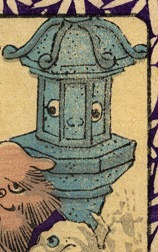
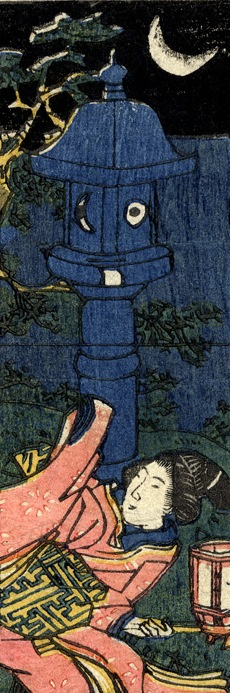
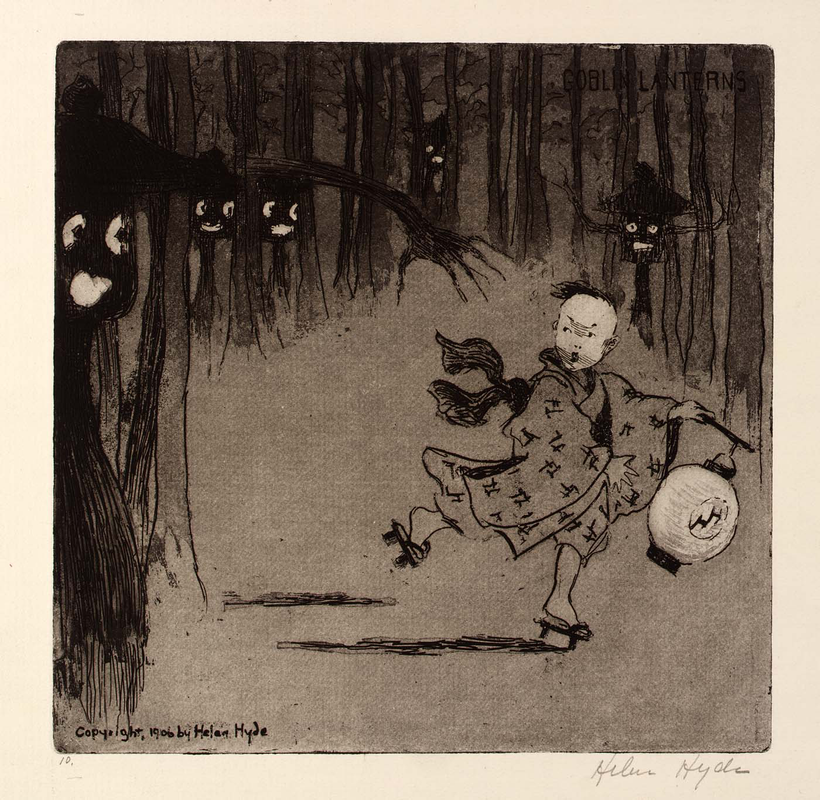
• Ishidoro-Obake (石灯籠お化け) “Stone lamp Spooks” – These two images of stone lanterns with facial features both came long after Sekien and Koroka in the mid-1800s as part of card and board games! It appears to be a stone lantern turned tsukumogami while Koroka is more like a yokai fire residing in a lantern. They’ve more in common with chochin obake than Koroka. I just thought they were cute so I figured why not include ’em here as a foot note?
[Art sticker & Writing by @SamKalensky (Yo, thats me!) Editing by @Cattype (I’m here too!) Part of my Hyakki Yagyo Night Parade of 100 yokai sticker series. Follow us & check my website out for many more!]
Additional information
Title
Default Title
Reviews
There are no reviews yet.
Be the first to review “Koroka – 古籠火 – [yokai]” Cancel reply

![Koroka - 古籠火 - [yokai]](https://samkalensky.com/wp-content/uploads/2026/03/Screenshot-2026-09-13-at-10.02.16-AM.png)
![Koroka - 古籠火 - [yokai] - Image 2](https://samkalensky.com/wp-content/uploads/2026/03/IMG_5266-scaled.jpeg)
![Koroka - 古籠火 - [yokai] - Image 3](https://samkalensky.com/wp-content/uploads/2026/03/Screenshot-2026-09-13-at-10.02.11-AM.png)
![Koroka - 古籠火 - [yokai] - Image 4](https://samkalensky.com/wp-content/uploads/2026/03/Screenshot-2026-09-13-at-10.02.21-AM.png)
![Choku-boron - [Yokai|Tsukumogami]](https://samkalensky.com/wp-content/uploads/2026/03/IMG_3223-324x324.jpeg)
![Abumi guchi - [Yokai|Tsukumogami]](https://samkalensky.com/wp-content/uploads/2026/03/21FF3F30-C4B0-493A-811D-17D7510E6D05-324x324.jpg)
![Furu-utsubo - 古空穂 - [Yokai|Tsukumogami]](https://samkalensky.com/wp-content/uploads/2026/03/53D26373-7997-4484-9849-51C06AEF9774-324x324.jpg)
![Koroka - 古籠火 - [yokai]](https://samkalensky.com/wp-content/uploads/2026/03/Screenshot-2026-09-13-at-10.02.16-AM-324x324.png)
Reviews
There are no reviews yet.